- Healthy crops = higher yields = better return on investment and profitability.
- Provides you with peace-of-mind through highly effective, broad spectrum control over both above and below ground pests, including a number of difficult-to-control species.
- Saves time and resources as you do not need to check your crops as often or to apply as many foliar insecticides to control the same target pests.
- Gaucho is more sustainable than foliar and granular insecticides as it is highly targeted, being applied only to the seed of the crops you aim to protect.
- Home
- Products
- SeedGrowth
- Gaucho
Gaucho
Gaucho is a proven, highly effective seed treatment insecticide providing broad spectrum control of above and below ground pests, in a range of important New Zealand crops. Once treated seed is planted, the active ingredient in Gaucho is released and forms a protective halo around the seed. As the plant grows, systemic action transports Gaucho throughout the developing stem and leaves, ensuring long lasting insect control, and maximising crop yield potential and profitability.

-
Benefits
-
Crop Suitability & Usage
-
Resources
| Crop | Pest Controlled |
|---|---|
| Cereals | Aphids Grass grub larvae |
| Forage Brassicas | Aphids Argentine stem weevil Springtails Wheat bug |
| Grass Seed | Black beetle Grass grub larvae |
| Maize and Sweetcorn |
Argentine stem weevil Black beetle |
| Potatoes |
Aphids |
| Pumpkins and Winter Squash |
Aphids Argentine stem weevil Grass grub beetle Lucerne flea Springtails |
| Product Type |
Seedgrowth |
| Active Ingredient |
Imidacloprid 600 g/litre Methanol (phenylmethoxy) < /> |
| Formulation Type | Suspension concentrate |
| Pack Size | 750 mL 900 mL 5 L 60 L 200 L 1000 L |
| Application Rate | Cereals: Use 90 ml/100 kg of seed. Mix with sufficient water (usually 10 L/tonne of seed) and apply to seed ensuring even coverage. Forage Brassicas: Use 12 - 24 ml/kg of seed. Apply to seed ensuring even coverage. The higher rate will increase the period of protection against aphids. Grass Seed: Use 580 ml/100 kg of seed. Mix with sufficient water, usually 10 L/tonne, and apply to seed ensuring even coverage. Maize and Sweetcorn: Use 580 ml/100 kg of seed. Mix with sufficient water (1 - 2 L/100 kg of seed) and apply to seed ensuring even coverage. On sweetcorn, transitory phytotoxic effects may occur in some sweetcorn varieties, particularly under dry conditions. These will disappear as the plant matures. Potatoes: Use 90 ml/tonne of seed. Mix with sufficient water, usually 2 - 3 L and apply to seed tubers ensuring even coverage. If treated tubers are to be kept for later planting, ensure they are thoroughly dry before storing. Pumpkins and Winter Squash: Use 50 ml/kg of seed. Mix with sufficient water (1 - 2 L/100 kg of seed) and apply to seed ensuring even coverage. |
No results for this category. Please select a different one.
Related Pests
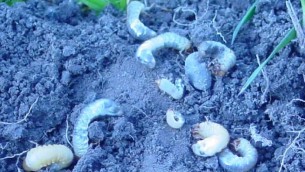
Grass Grub Larvae
Costelytra zealandica
Grass grub (Costelytra zealandica) is the larval stage of the bronze beetle and is found throughout New Zealand from Southland as far north as Waikato. Grass grubs feed on the roots of pasture and autumn planted cereals and can cause extensive plant death if not controlled. Grass grubs have three larval instars and each one is capable of causing damage but the third instar, which is usually between February and spring, is the most damaging. Not all the larvae at their largest but this also coincides with plant establishment. The treatment threshold for grass grub is two grubs per spade square. Well before sowing, take a garden spade and dig ten sample squares to the depth of the spade blade in a diagonal across the paddock. Sift through the soil and if an average of more than two grubs per sample is found treat with an effective seed treatment.
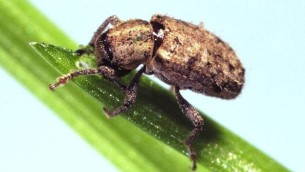
Argentine Stem Weevil
Listronotus bonariensis
Argentine Stem Weevil (Listronotus bonariensis), often referred to as ASW, is a small weevil from South America that is now found throughout New Zealand. Adult stem weevils are hard to detect by eye being only 3.5mm long. Larvae feed in the developing shoots of many important crops including pasture, maize, sweetcorn, cereals and brassicas and it is the larvae that are responsible for the tremendous economic losses attributable to ASW in New Zealand each year. Depending upon the weather experience ASW can complete multiple life cycles each year with egg laying taking place between July and March.
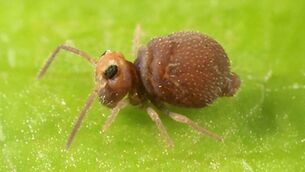
Springtail
Bourletiella hortensis
The brassica or common springtail is one of several springtails that feed on brassicas causing economic damage by reducing plant establishment. Brassica springtails are tiny at around 1.00 mm and are difficult to find. They live on the soil surface, laying eggs in the soil and as each lifecycle is rapid several generations can occur each year.